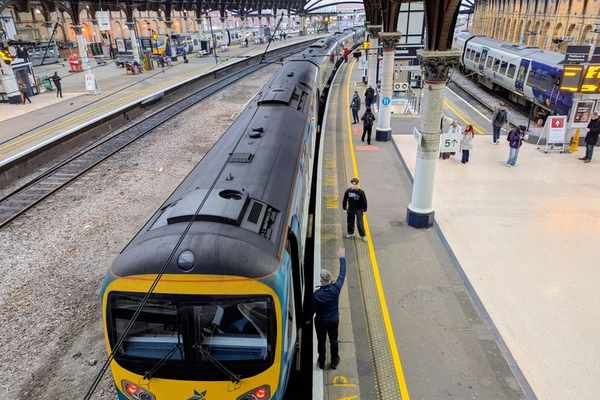
Train travel in Britain can feel expensive, especially when passengers on the same service may have paid very different prices. The good news is that cheap train travel in the UK is often less about finding a secret discount and more about choosing the right ticket type, travel time and route before you pay. A few minutes of comparison can make a real difference on longer journeys.
Treat the fare as flexible rather than fixed. Check when you are travelling, whether your plans can change, whether you qualify for a Railcard and whether one through ticket is actually the cheapest way to complete the journey.
Book Advance tickets when your plans are firm
Advance tickets are usually the first place to look for cheap rail tickets in the UK when you know exactly which train you want. They are sold in limited numbers and tied to a specific service, so cheaper quotas can disappear as the departure date approaches.
National Rail says Advance tickets can usually be bought up to around 12 weeks before travel, although release dates vary and some operators sell them much closer to departure. Check early, but look again if tickets were not yet available when you first searched.
The trade-off is flexibility. Advance tickets are generally non-refundable unless disruption means you decide not to travel, and changing one can involve a fee plus any fare difference. If your plans are uncertain, a slightly dearer flexible ticket may prove better value.
Move your journey away from peak periods
One of the simplest UK train fare tips is to compare the trains immediately before and after your preferred departure. Off-Peak and Super Off-Peak fares, where available, are designed for quieter travel periods and cost less than Anytime fares.
Do not assume every route uses the same peak hours. Restrictions depend on the journey, operator and ticket, and some routes have evening restrictions. Check the restriction code or journey planner before buying.
For a practical check, search the same trip three ways: your ideal departure, a later service after the busiest period, and a weekend service if your dates can move. Compare the total price rather than assuming the fastest or earliest train offers the best value.
See whether a Railcard pays for itself
For many travellers, a Railcard is one of the most reliable ways to save money on train travel. Eligible Railcards commonly reduce qualifying fares by one third, while the 16-17 Saver offers a larger discount on many adult fares. Different cards cover younger adults, seniors, disabled passengers, couples travelling together, families and other groups.
Estimate what you expect to spend on rail journeys over the next year. If the likely discount exceeds the cost of the card, it can make sense even for a few longer trips. Minimum fares, time restrictions and exclusions can apply, so check the conditions for the specific Railcard.
Compare split tickets with a through ticket
Split ticketing can reduce the cost of budget rail travel without changing the actual train. Instead of buying one ticket from your starting station to your destination, you buy two or more tickets covering sections of the journey.
This is permitted under National Rail rules, but the train normally needs to stop at the station where one ticket ends and the next begins. You do not usually need to get off. Each ticket must still be valid for the train, time and route you are using.
A useful routine is to compare the normal through fare with a split-ticket option at one of the train’s scheduled stops. Then compare both against an Off-Peak or Railcard-discounted fare. Split tickets are not always cheaper, but checking them is worthwhile on costly intercity journeys.
Compare routes and ticket combinations
The quickest journey is not always the cheapest. If two routes connect the same cities, a slower service or a route with a change can sometimes cost less. Compare reasonable alternatives instead of automatically accepting the first result in a journey planner.
It can also be cheaper to mix ticket types. An Advance single for a fixed outbound journey and a flexible Off-Peak ticket for the return may suit someone who knows when they are leaving but not exactly when they will come home. Looking at each direction separately can reveal useful options.
Natural related guides to explore alongside this topic include budget travel around the UK, understanding UK public transport and planning low-cost city breaks.
Check season, Flexi Season and group options
If you repeat the same route regularly, compare individual tickets with a Season ticket or Flexi Season option where available. The saving depends on how often you travel, so calculate the cost using your real weekly pattern.
Travelling with other people can change the calculation too. GroupSave is available on various Off-Peak journeys, while some Railcards are designed for people travelling together. For multi-stop leisure trips, Ranger and Rover tickets can also be worth comparing because they cover travel within a defined area or period.
Avoid paying more through a booking mistake
Cheap fares only help if the ticket is valid. Before paying, check the date, departure time, permitted route, operator restrictions and Railcard details. With split tickets, confirm that your train stops at every station where the tickets divide. With Advance tickets, make sure you are comfortable being tied to the booked service.
Compare the final checkout price and the flexibility you receive, not just the lowest number on the first search screen. The best-value ticket is the one that is both valid and suitable for your actual plans.
Frequently asked questions
When is the cheapest time to buy UK train tickets?
For a fixed long-distance journey, check as soon as Advance tickets are released because the cheapest quotas are limited. Some operators also sell Advance tickets close to departure, so it can still be worth checking later.
Are Off-Peak tickets always valid after 9:30am?
No. That is a common general guide for many journeys, but actual restrictions vary by route and ticket. Always check the ticket’s restriction code or journey planner for the service you intend to use.
Is split ticketing legal in the UK?
Yes. Split ticketing is permitted, provided the ticket combination is valid. In the usual case, the train must stop at the station where one ticket ends and the next begins.
Can I use a Railcard with Advance or split tickets?
Railcard discounts can apply to many Advance, Off-Peak and split tickets where the fare is eligible. Carry or display the Railcard used to buy the discounted ticket and check any minimum fare or time restrictions.
Make comparison part of the booking
The most effective approach is to compare several legitimate options before committing: Advance versus flexible fares, peak versus quieter departures, through tickets versus splits, and direct routes versus reasonable alternatives. Add a Railcard, season product or group discount where it fits. That small comparison habit can make rail journeys more manageable without relying on risky loopholes or unrealistic fare promises.