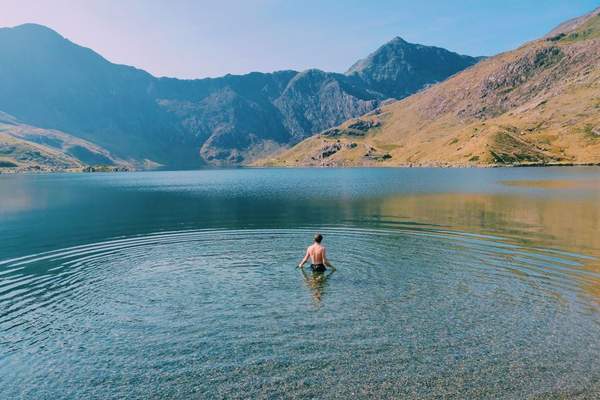
Wild swimming can turn a simple day outdoors into a small adventure. One minute you are walking beside a quiet loch or through a wooded valley; the next you are easing into water that feels colder and more alive than any pool. The best wild swimming spots in the UK range from mountain lakes to sheltered bays, so the right choice depends as much on weather, access and experience as scenery.
Conditions can change quickly, especially after heavy rain or during warm spells when algae may appear. Treat every location as a fresh decision on the day rather than assuming a favourite spot is always safe. Check local notices, weather, tides and water-quality information before entering.
Wast Water, Lake District
Wast Water is hard to beat for drama. England’s deepest lake sits beneath steep Lakeland fells, with scree slopes and mountain views giving the water an almost alpine character. It is a memorable choice for confident swimmers who want scenery rather than beach facilities.
Lake District water can remain very cold even in summer, and underwater hazards are not always visible. Enter gradually, stay near an easy exit point and use a bright cap and tow float so other water users can see you.
Llyn Padarn, Llanberis, Wales
Llyn Padarn is one of the most approachable outdoor swimming spots in Eryri. The lake lies beside Llanberis and is popular with swimmers and water-sports users, while the surrounding mountain scenery gives even a short dip a strong sense of place.
It works well for travellers who want lake swimming without committing to an isolated mountain approach. Visibility still matters because paddlers and other craft share the water, so a bright cap and tow float are sensible.
Llyn Tegid, Bala, Wales
Llyn Tegid, also known as Bala Lake, is Wales’s largest natural lake and a well-established destination for swimming, paddling and other water activities. Its scale feels adventurous, but the nearby town makes planning easier than at many remote locations.
Wind can quickly change the character of a large lake. If the surface is building into chop, shorten your route and stay close to shore rather than committing to a long crossing.
Sharrah Pool, Dartmoor, Devon
For a more hidden experience, Sharrah Pool on the River Dart delivers the classic woodland version of wild swimming. Reached on foot through the Dart Gorge area, the pool is framed by trees and granite, creating the sense of a genuine escape.
River conditions are the deciding factor. After heavy rain, levels can rise and currents become much stronger. A practical rule is simple: if the river looks fast, coloured or noticeably higher than expected, save the swim for another day rather than testing your strength against moving water.
Barafundle Bay, Pembrokeshire
Barafundle Bay is a rewarding coastal option for swimmers who like a little effort before the water. The sandy bay is reached on foot from the Stackpole area, with cliffs, dunes and clear-looking sea giving it a wonderfully tucked-away feel.
Because this is open sea, check tide, wind and swell before setting off. The walk also means carrying everything in and out, including warm layers for after the swim.
Kynance Cove, Cornwall
Kynance Cove is one of Britain’s most photogenic coastal landscapes, with turquoise water, pale sand and distinctive rock stacks. On a calm day it can look irresistible, but it deserves more caution than its postcard appearance suggests.
The cove is tidal, the beach shrinks as the tide rises, and there is no lifeguard service. Treat it as a conditions-dependent sea swim rather than a guaranteed bathing spot. Check tide times and avoid rough water.
Loch Lomond at Milarrochy Bay, Scotland
Scotland’s access rights generally extend to responsible swimming, subject to local rules, and Loch Lomond is one of the country’s best-known open-water destinations. The National Park identifies Milarrochy Bay on East Loch Lomond as a popular swimming site.
The loch is shared with boats, so visibility is essential. Swim with another person, wear a bright cap and consider a tow float. Watch for sudden depth changes close to shore and avoid any blue-green algae warnings.
Portstewart Strand, Northern Ireland
Portstewart Strand offers a broad coastal swim backed by two miles of golden sand and dunes. Swimming and surfing are established activities here, and seasonal lifeguard cover makes it useful for people who want a natural coastal setting with clearer safety cues than a remote cove.
When lifeguards are operating, follow the beach flags and pay attention to the tide. Northern Ireland publishes bathing-water updates during the bathing season, so checking the latest result is an easy step before travelling.
How to swim safely in UK open water
Cold water swimming deserves respect even on warm days. The RNLI describes water at 15°C or below as cold enough to trigger cold water shock, which can suddenly affect breathing and movement. Enter slowly, give your body time to adjust and never jump into unfamiliar water.
Swim with someone, tell another person where you are going, keep an easy exit in mind and avoid alcohol. At the coast, check tides and choose a lifeguarded area when possible. In rivers, be especially cautious after rain. England’s designated bathing waters have official water-quality information during the bathing season, while Scotland, Wales and Northern Ireland operate their own monitoring services.
For more trip planning, natural internal links here would be cold water swimming safety, UK adventure travel ideas and responsible outdoor travel.
FAQs
Is wild swimming legal in the UK?
Access rules vary by country, land ownership and local byelaws. Scotland has broad responsible-access rights that extend to swimming, while elsewhere you should check local access, ownership, signage and restrictions before entering the water.
What equipment do I need for wild swimming?
A bright swim cap, tow float, towel, warm clothing and suitable footwear are a useful starting point. A wetsuit can add warmth and buoyancy, especially for longer swims or colder conditions.
How can I check whether the water is clean enough to swim in?
Use the official bathing-water service for the part of the UK you are visiting and check local alerts. Avoid water affected by visible blue-green algae, pollution warnings or recent heavy rainfall where runoff may worsen water quality.
When is the best time of year for wild swimming?
Late spring to early autumn usually offers milder conditions and longer daylight, but water can remain cold throughout the year. Winter swimming calls for shorter exposure, stronger safety planning and appropriate kit.
Choose the swim, not just the view
The UK’s best wild swims are memorable because each has its own character: a mountain lake under high fells, a forest pool reached on foot, or a cove revealed by the tide. The most rewarding days come from matching the location to the conditions and your ability. Check local information, keep the swim modest, leave yourself an easy exit and enjoy the landscape around the water as much as the water itself.