Petra is the kind of place that looks familiar long before you arrive, yet the first walk through the Siq still feels startlingly new. The famous glimpse of the Treasury is only the opening scene. Beyond it lies a sprawling Nabataean city of tombs, temples, colonnaded streets, water channels and mountain trails. A good Petra Jordan guide therefore needs to do more than tell you where to take the classic photograph: it should help you plan enough time, avoid the hottest hours and understand what you are actually looking at.
Why Petra deserves more than a quick Treasury stop
Petra was a major Nabataean caravan centre between Arabia, Egypt and the Mediterranean world. Its builders carved monumental façades into sandstone while creating channels, dams, cisterns and reservoirs to manage scarce water and sudden floods. UNESCO added Petra to the World Heritage List in 1985.
The Treasury, or Al-Khazneh, is Petra’s best-known monument, but its name is misleading. It was probably built as a mausoleum rather than a storehouse for treasure. That detail changes the way visiting Petra feels: this was not a single ceremonial façade in the desert, but a functioning city shaped by trade, religion, engineering and successive cultures.
Best time to visit Petra
Spring from March to May and autumn from September to November are generally the most comfortable periods, with milder temperatures for long days on foot. Summer can be intensely hot, especially on exposed trails, while winter brings colder mornings and a greater chance of rain. Because the Siq and surrounding wadis can be affected by flash flooding, check the local forecast and official visitor information before setting out.
Whatever the season, arriving close to opening time is one of the most useful Petra entry tips. You gain cooler walking conditions, softer light in the sandstone and a quieter first passage through the Siq. The official site currently lists daylight access from 6:30am for major locations, but hours can change, so confirm them for your travel date.
Tickets, the Jordan Pass and entry planning
For international visitors staying in Jordan, the official one-day Petra ticket is currently 50 Jordanian dinars, with two- and three-day consecutive tickets priced only slightly higher. A same-day visitor who is not accommodated in Jordan pays a higher rate. Children under 12 receive free daylight admission according to the official Petra fee information. Prices and conditions can change, so treat these figures as planning guidance rather than something to rely on months in advance.
The Jordan Pass can make sense if Petra is part of a wider Jordan itinerary. Its packages include one, two or three consecutive days at Petra plus entry to dozens of other attractions. It may also waive the tourist visa fee for eligible travellers who buy it before arrival and stay a minimum of two nights. Compare the pass against your nationality, visa arrangements and planned attractions before purchasing.
How to see Petra properly in one day
Start with the Siq and Treasury early
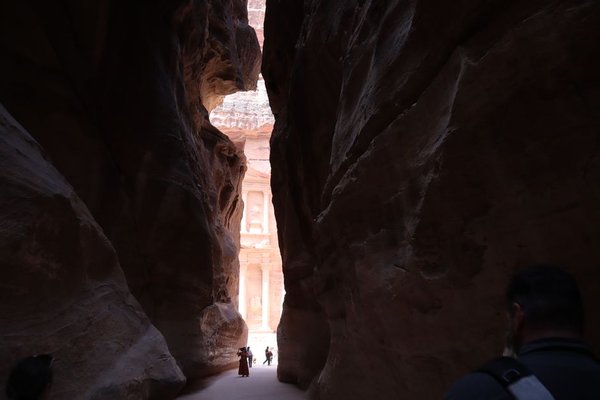
From the visitor centre, follow the main route toward the Siq, a narrow natural gorge just over a kilometre long. Do not rush it. Look for the carved water channels and traces of Nabataean engineering along the walls. The final turn, where the Treasury Petra façade appears between the rock faces, is spectacular precisely because the approach builds anticipation.
Keep walking beyond the famous façade
Many first-time visitors linger at the Treasury and then turn back too soon. Continue along the main trail past the Street of Façades, theatre, Royal Tombs and the central area toward the Colonnaded Street and Qasr al-Bint. This is where Petra begins to read as a city rather than a single monument.
A practical one-day scenario is to reach the Treasury early, explore the main city before midday, stop for water and a simple lunch, then decide whether your energy and the weather allow the climb to the Monastery, Ad-Dayr. The Monastery is one of Petra’s largest rock-cut monuments and rewards the extra effort, but the stepped route is demanding. Do not treat it as an obligatory box to tick if heat, mobility or time makes the climb unwise.
What to bring for a day inside Petra
Wear shoes with reliable grip rather than fashion trainers or sandals. Petra combines sand, stone paving, uneven surfaces and long stretches of walking. Carry more water than you think you will need, sun protection, a hat and a light layer for cool mornings or evenings. Cash in Jordanian dinars is useful for small purchases, although official facilities may also accept cards.
Pack lightly. A small day bag with water, sunscreen, phone, power bank and a snack is usually more useful than a large backpack. Travellers building a longer trip may also want to plan around a Jordan road trip itinerary or a Wadi Rum desert guide so Petra fits naturally into the journey.
Petra by Night: worth adding?
Petra by Night is a separate evening experience along the Siq to the Treasury. The current official programme runs Sunday to Thursday from 8:30pm to around 10:30pm and requires a separate ticket plus a valid daytime Petra ticket or Jordan Pass. It is atmospheric, but not a substitute for seeing Petra in daylight.
If you plan to attend after a full day of hiking, consider returning to your hotel in Wadi Musa for food and rest first. The evening involves another walk through the Siq on uneven ground, and fatigue can take away from the experience.
FAQ about visiting Petra
How many days do you need in Petra?
One full day can cover the Siq, Treasury and much of the main trail, with the Monastery possible for fit visitors moving efficiently. Two days are better if you want a slower pace, additional viewpoints or side trails without turning the visit into a race.
Can you visit Petra without a guide?
Yes. The main trail and many major sights can be visited independently. A licensed guide can add valuable historical context and make smaller details easier to notice, especially if this is your first archaeological site in Jordan.
Is the Treasury the entrance to Petra?
No. Visitors enter through the visitor centre area and walk through the Siq before reaching the Treasury. The ancient city continues far beyond it, so allow several more hours if you want to see Petra properly.
Where should you stay for Petra?
Wadi Musa is the practical base, with accommodation ranging from simple guesthouses to larger hotels. Staying nearby makes an early start much easier and avoids turning Petra into a rushed same-day transfer.
Plan for the city, not just the photograph
The best way to experience Petra is to give the landscape time to unfold. Arrive early, walk the Siq slowly, enjoy the Treasury without treating it as the finish line, and save enough energy for the deeper city. With realistic pacing, sensible footwear and current entry information, Petra becomes much more than a bucket-list backdrop: it becomes an archaeological landscape you can actually understand as you move through it.