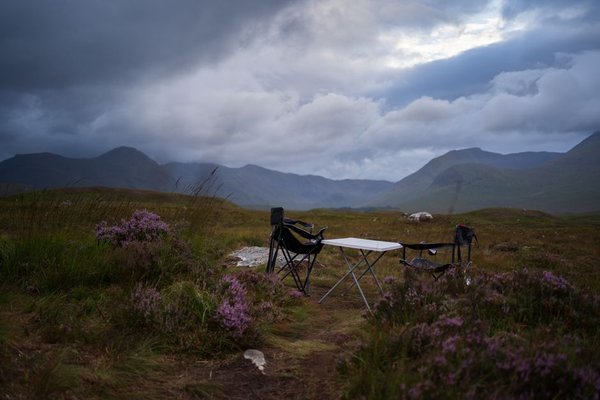
Hiking through Scotland with a tent means finishing a day on the trail without rushing back to a car park. But carrying shelter, food and sleeping kit changes every decision, from distance to where you stop. A successful wild camping Scotland hiking trip is planned around safe distances, suitable ground and a realistic exit strategy, not just a spectacular view.
Scotland offers scope for self-supported adventures, from Highland glens to quieter forest routes. That freedom brings responsibilities around land access, unpredictable weather and protecting fragile places.
Build the route around your overnight stop
Start with the walking, then assess where a responsible overnight stay might fit. A route that feels easy with a daypack can become demanding with extra weight, especially on boggy paths or steep descents. Check distance, ascent, terrain, river crossings and time needed to find a pitch before dark.
For a first outing, a one-night out-and-back route is often easier than a remote traverse. It provides a familiar return option without the pressure of reaching a distant transport connection. Experienced backpackers can consider longer trails, but should allow for unsuitable camping ground or bad weather.
Use detailed Ordnance Survey mapping, route reports and a physical map and compass. A downloaded phone map helps, but batteries fail and Highland paths are not always obvious. Our guide to Scottish long-distance walking routes can help you compare approaches.
Understand Scotland’s wild camping rules
The Scottish Outdoor Access Code allows responsible lightweight tent camping wherever access rights apply. Its guidance describes small groups staying for two or three nights at most in one place. Camp well away from roads, buildings and historic structures, and avoid enclosed fields containing crops or farm animals. Access rights do not extend to motorised camping in a vehicle.
There is an important local exception: parts of Loch Lomond & The Trossachs National Park have Camping Management Zones. Between 1 March and 30 September, camping inside these zones generally requires a permit or a designated campsite. Check the National Park’s current zone map before setting off; the rules do not cover the entire park.
Other locations may have site-specific restrictions or conservation concerns. Responsible access is not permission to occupy any convenient patch of ground. If an area is busy, damaged or close to homes, choose somewhere else.
Pack for walking, not car camping
Every item must earn its place. Prioritise a weather-resistant tent you can pitch confidently, a sleeping bag appropriate for expected temperatures, and an insulated sleeping mat. A rucksack with a fitted hip belt makes a difference over a long day.
Carry waterproof jacket and trousers, insulating layers, dry socks, a headtorch, first-aid supplies, repair essentials, navigation tools and extra food. A stove and fuel are more dependable than planning to build a fire. Keep your sleeping system dry in waterproof liners even if your pack has a rain cover.
Test the complete kit on a local walk before your Scotland camping trip. Pitch the tent in poor light, practise using the stove safely outdoors and check whether you can carry the loaded bag for your planned distance. A practical backpacking gear checklist is more valuable than buying every gadget.
Plan drinking water and meals together
Water on the map is not automatically safe. Scottish burns and lochs can contain microorganisms, even when clear. Carry enough to reach a dependable source and treat collected water with a suitable filter, purifier or boiling method. Consider livestock, upstream activity and contamination risks when selecting sources.
Choose meals that use little fuel and create minimal washing-up. Calculate drinking and cooking needs before settling on a pitch. Never leave food scraps or wash water beside a stream; take rubbish away and dispose of wastewater responsibly away from watercourses.
Let mountain weather set the pace
Town forecasts may bear little resemblance to conditions on exposed Highland ground. Consult the Met Office mountain forecast or Mountain Weather Information Service, focusing on wind, temperature, visibility and rainfall. Wind can make a sheltered-looking pitch unsuitable, while prolonged rain can raise streams and saturate paths.
Set a latest turnaround time and identify lower-level alternatives. In winter or when snow and ice persist, hills may require specialist skills, equipment and avalanche awareness; a summer backpacking plan is not automatically suitable. Share your intended route and expected return with someone reliable.
Choose a low-impact place to sleep
Look for durable, level ground away from water edges, paths, homes and sensitive vegetation. Avoid blocking access, disturbing wildlife or pitching beneath unstable trees. Arrive in daylight to assess drainage: a hollow that appears cosy in dry weather can collect runoff overnight.
Use a stove rather than an open fire. The Scottish Outdoor Access Code warns against fires and barbecues in dry conditions and near forests, moorland, farmland, buildings or historic sites. Carry out every piece of litter, including food packaging and hygiene products. Deal with human waste discreetly using a trowel where appropriate, away from water and heavily used areas; pack out anything that cannot safely be buried.
A realistic first overnight plan
Imagine a two-day hiking and camping Scotland outing from a trailhead near Aviemore. Instead of fixing a remote summit camp, choose a lower-level route with possible stopping points, then check current access guidance and sensitive areas. Aim for a modest first day’s walk with time to assess a discreet pitch. If the ground is unsuitable or winds strengthen, return or use an established campsite.
Next morning, pack up and check for forgotten pegs and litter. This flexible plan may sound less dramatic than chasing a famous viewpoint, but it teaches skills that make longer backpacking Scotland journeys enjoyable. Our mountain weather planning guide is a useful companion to an overnight trial.
Frequently asked questions
Can you wild camp anywhere in Scotland while hiking?
No. Responsible lightweight camping is covered by Scottish access rights where they apply, but not on every piece of land. Local restrictions, including seasonal Camping Management Zones in parts of Loch Lomond & The Trossachs, must be respected.
How many nights can you stay in one place?
The Scottish Outdoor Access Code describes wild camping in small numbers for two or three nights in one place. Moving on sooner helps reduce pressure on vegetation and popular locations.
Is wild camping in Scotland suitable for beginners?
Yes, with a modest route, tested kit, navigation skills and a conservative weather plan. For a first trip, staying near a managed campsite offers a fallback without removing the experience of carrying your equipment.
What is the best time of year for a hiking and camping trip?
Late spring to early autumn generally offers longer daylight, but rain, strong wind and cold nights remain possible. Summer may also bring midges, particularly in sheltered, damp areas. Select dates by forecast, terrain and experience rather than the calendar alone.
Make the journey the priority
The best wild camping Scotland hiking plans leave room to adapt. Choose an achievable route, respect local access guidance, prepare for weather changes and leave your campsite looking untouched. When your overnight stop supports the walk rather than dictates it, you have a better chance of enjoying both.