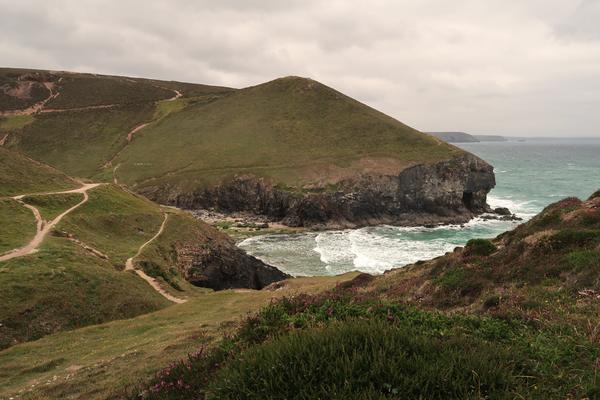
The South West Coast Path is 630 miles long, but your holiday does not need to be. Running from Minehead in Somerset around Devon and Cornwall to South Haven Point near Poole, it rewards people who tackle a weekend as much as those who complete the full trail. A useful South West Coast Path itinerary starts with the days you actually have, then works backwards to find manageable walking, somewhere to sleep and a reliable way home.
Think of the route as several coastal walking holidays rather than one enormous commitment. The official 52-day itinerary is a reference, not a timetable you must follow. Many walkers complete sections over several years.
Start with your available days
Count walking days separately from travel days. If you can take four days off work, a two- or three-day walk may be more enjoyable than arriving late and racing for a train at the end. Leave room for a delayed journey, poor visibility or simply lingering at a headland worth exploring.
Decide whether you want a continuous point-to-point walk or day walks from one accommodation base. Point-to-point trips feel satisfying, but a fixed base can make luggage and transport simpler.
Which South West Coast Path sections should you choose?
Somerset and North Devon: dramatic climbs
Starting at Minehead gives you the traditional sense of beginning the trail. Exmoor and North Devon bring wooded valleys, exposed headlands and repeated climbs. Do not assume moderate mileage means an easy day. Choose this area if you enjoy hills and can manage gaps between facilities.
North and West Cornwall: wild Atlantic scenery
North Cornwall offers big cliff views and villages such as Boscastle and Tintagel. Farther west, the coast around St Ives, Zennor and Land’s End can feel remote despite its popularity. Steep steps and rocky surfaces make some days slower than their distance suggests. Favour shorter South West Coast Path stages here if you are new to multi-day walking.
South Cornwall and Devon: harbours and ferries
The southern coastline mixes sheltered creeks with demanding headlands. Falmouth, Fowey, Salcombe and Dartmouth make appealing stopping points, although estuary crossings can control your schedule. A ferry that does not operate when needed can create a long inland detour.
East Devon and Dorset: geology with serious hills
The Jurassic Coast offers striking landscapes near Lyme Regis, Lulworth and the Purbeck coast. It is tempting to picture gentle seaside strolling, but several stretches involve steep climbs, exposed ridges and erosion-related diversions. Judge difficulty by the actual route, not the resort at its endpoint.
Build realistic daily distances
There is no universal daily target. For a mixed-ability group or a first coastal walking holiday, roughly 6–10 miles may be a sensible starting range on harder terrain; experienced walkers may manage more. These are planning examples, not fixed limits. Elevation, surfaces, weather, breaks and pack weight matter as much as mileage.
The official route is divided into 52 suggested walking days, but some are markedly tougher than others. Compare the distance and ascent with walks you have actually completed. Ten miles with repeated steep valleys can take far longer than ten miles on level ground.
Identify a realistic finishing village before selecting each day’s start. Check its accommodation, food and onward transport. Then use the official distance calculator and route descriptions to test the plan. Advice on walking pace and hill climbs can help estimate a comfortable schedule without treating it as a promise.
A practical two-day North Cornwall itinerary
Suppose you have a weekend and want a taste of the rugged coast without committing to a week. Consider Bude to Boscastle, staying overnight at Crackington Haven, provided accommodation and transport work for your dates.
On day one, walk Bude to Crackington Haven, about 9.8 miles. The opening near Widemouth Bay is comparatively forgiving, but the path later plunges through steep valleys. Do not schedule your arrival like a flat ten-mile walk. On day two, continue to Boscastle, around 6.7 miles. This shorter stretch allows more time for climbing and travelling home.
Confirm a bed at Crackington Haven before committing, and check current bus connections at both ends; older guides may list outdated operators. If the logistics fail, adjust the walk rather than forcing it. A practical southwest hiking itinerary is shaped by accommodation and exits just as much as scenery.
Plan overnight stops and transport together
Record each day’s start, finish, distance, difficulty, accommodation and escape route. Smaller settlements can have limited rooms, especially during school holidays. A remote overnight stop is less attractive if the only available bed involves several extra miles inland.
Trains reach larger gateways, while buses fill many gaps; neither should be assumed to run late or daily. Check the last practical connection, not just whether a route exists. Decide whether to carry luggage, arrange a transfer or return to a fixed base each night. Review a coastal walking packing list before choosing what to carry.
Several South West Coast Path sections depend on ferries, including crossings near Dartmouth and Salcombe. Services can have seasonal schedules or be affected by weather. Confirm departure times directly with operators and know your alternatives.
Check conditions just before setting out
Erosion and landslips can close paths and introduce inland diversions, sometimes adding distance. Check the South West Coast Path Association’s latest route-change information before departure and follow signs on the ground. A route downloaded months earlier may be out of date.
Check forecasts, wind exposure and tide times daily. Never take an unofficial beach shortcut without understanding the tide. Carry offline mapping, waterproof layers, water and food, and tell someone your intended route. Mobile reception can be unreliable on remote cliffs. Coastal path safety advice is worth reading before exposed walks.
Leave room to enjoy the journey
The best plan has a little slack: a shorter first day, a realistic finish and time to stop without chasing arbitrary mileage. If you hope to walk the full trail eventually, record each endpoint so the next holiday can begin where the last ended. Completing it in pieces still counts, one satisfying stretch at a time.
Frequently asked questions
How long does it take to walk the entire South West Coast Path?
The Association’s suggested itinerary uses 52 walking days, while a relaxed full journey often takes seven to eight weeks. You can also split the route between holidays.
What is a good first section for a short break?
Pick a stretch with manageable distances and confirmed transport. Bude to Boscastle is scenic but challenging; shorter local walks may better suit beginners.
Can I walk the South West Coast Path without a car?
Yes. Many sections are accessible by trains, buses and occasional ferries. Check connections for your chosen endpoints, particularly on Sundays and outside summer.
What time of year is best for a coastal walking holiday?
Late spring and early autumn often balance daylight with potentially quieter accommodation. Weather remains variable, so check ferry schedules, forecasts and closures before booking.