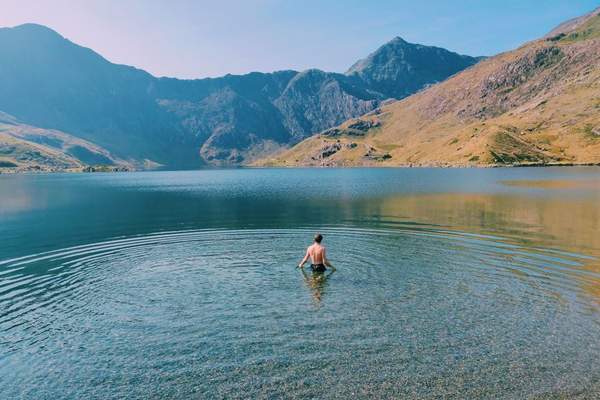
Wild swimming has moved far beyond a fringe outdoor hobby. Across the UK, swimmers are seeking mountain lakes, woodland rivers and sheltered coastal coves for the simple thrill of entering natural water. The best experiences are places where dramatic scenery, sensible access and conditions suited to your ability come together.
This guide highlights memorable wild swimming spots UK travellers can build into a weekend away or a longer adventure. Conditions change quickly, so treat every location as a starting point for planning rather than a promise that swimming will be safe on the day.
Wild swimming spots in England
Wast Water, Lake District
Wast Water delivers one of the most dramatic settings for lake swimming in Britain. England’s deepest lake sits beneath the steep Wasdale Screes, with Great Gable and the surrounding fells creating a rugged backdrop. On a calm day, even a short shoreline dip feels like a real expedition.
The depth and exposed position demand respect. Water can remain extremely cold, and wind can quickly roughen the surface. Beginners should stay close to an easy exit rather than attempt a crossing. Facilities are limited compared with the central Lakes, so arrive prepared and avoid blocking narrow roads or gateways.
Sharrah Pool, Dartmoor
Hidden within the wooded Dart Gorge, Sharrah Pool is one of Devon’s most atmospheric outdoor swimming spots. The River Dart widens into a dark-green pool surrounded by mossy boulders, oak woodland and moving water. Reaching it involves a walk, which preserves its sense of escape.
River conditions are crucial. After heavy rain, the Dart can rise fast and currents may become powerful. Choose a settled spell, use established paths and avoid jumping from rocks. Access rivers only from lawful points, and respect wildlife and other river users.
Wild swimming spots in Wales
Llyn Padarn, Eryri
Llyn Padarn near Llanberis suits swimmers who want mountain scenery with nearby facilities. The glacial lake offers views towards Yr Wyddfa, while Padarn Country Park and Llanberis provide parking, toilets, cafés and activity operators. It is also Wales’s designated inland freshwater bathing water, with quality monitored during the bathing season.
That designation does not remove the risks. Llyn Padarn is deep, cold and generally not lifeguarded, with steep drop-offs in places. Calm weather is best, and less experienced swimmers may prefer an organised session. For a first taste of wild swimming UK landscapes, it balances adventure and accessibility.
Barafundle Bay, Pembrokeshire
Barafundle Bay feels wonderfully secluded, despite being reached by a manageable walk from Stackpole Quay. Golden sand, dunes and clear-looking water give it the appearance of a far-flung cove. It is ideal for a coastal dip followed by a picnic or coast-path walk.
Never assume sheltered-looking water is calm or lifeguarded. Check tide times, wind, swell and local signs before entering. Stay within your depth and keep clear of rocks when waves are present. Warm layers and dry footwear are essential for the walk back.
Wild swimming spots in Scotland
Milarrochy Bay, Loch Lomond
Loch Lomond offers vast open water, but Milarrochy Bay on the eastern shore is one of its better-known swimming entry points. The beach provides relatively straightforward access and wide views across the loch. Its popularity with groups also makes it more sociable than an isolated Highland dip.
The loch is shared with boats, so visibility matters. Wear a bright cap, use a tow float and avoid busy boating areas. Wind can create a surprising swell, while blue-green algae may appear in warmer periods. Check current notices and never enter where an algae warning is displayed.
Fairy Pools, Isle of Skye
The Fairy Pools at Glenbrittle are among Scotland’s most photographed natural attractions. Clear cascades run down from the Black Cuillin into a chain of rock pools, creating an unforgettable setting for cold water swimming. For many visitors, this is better as a brief immersion than a distance swim.
The water is intensely cold, rocks are slippery and currents strengthen after rain. The site can be busy, so avoid obstructing paths or treating the pools like a diving venue. A controlled dip with warm clothing ready is wiser than staying in to prove a point.
Wild swimming in Northern Ireland
Portstewart Strand, County Londonderry
Portstewart Strand combines coastal swimming with a broad, accessible beach. Its two-mile sweep of golden sand offers space to walk, swim and watch the changing Atlantic light. Seasonal lifeguard coverage in designated sections makes it practical for swimmers who prefer clearer safety arrangements.
Use the lifeguarded area when operating and swim between red and yellow flags. Pay attention to tides, surf and red-flag warnings. Check Northern Ireland’s official bathing-water information before visiting, particularly after heavy rain.
How to plan a safer wild swim
Cold water swimming requires a different mindset from pool swimming. Go with another person, tell someone your plan and choose an entry point with a clear exit. Enter gradually rather than jumping or diving, because submerged rocks, sudden depth and cold water shock may be invisible from shore.
Check weather, tides, river levels, access rules and water-quality notices shortly before setting out. Avoid sewage warnings, blue-green algae, flood conditions and strong currents. A bright cap and tow float improve visibility, while a wetsuit adds warmth but cannot make unsafe conditions safe.
Afterwards, dry off quickly and change into warm, windproof layers. If you get into difficulty, resist the urge to thrash. Roll onto your back, relax, control your breathing and float until you can call for help or move safely.
Frequently asked questions
Is wild swimming legal everywhere in the UK?
No. Access rights and rules vary by location, landowner and nation. Reservoirs, quarries and protected sites may prohibit swimming. Always check local signs and official guidance.
What is the best time of year for wild swimming?
Late spring to early autumn offers longer daylight and milder air, but natural water can remain cold all summer. Beginners should start in settled conditions and build experience gradually.
Do I need a wetsuit for lake swimming?
A wetsuit is not always compulsory, but it can provide warmth and some buoyancy. The choice depends on temperature, duration, experience and local rules. Warm clothing for afterwards is essential either way.
How can I check whether the water is clean?
Use official bathing-water services for designated sites and check local pollution or algae notices. Many rivers and remote lakes are not routinely monitored for swimmers, so clear-looking water is not proof of good quality.
Choose the experience, not just the photograph
The best wild swimming spots in the UK combine beautiful surroundings with conditions you can assess honestly. A shoreline dip at Llyn Padarn, a forest swim in Dartmoor or a flagged sea swim at Portstewart can be memorable without being extreme. Plan carefully, respect communities and wildlife, and walk away when the water does not look right. That judgement is part of the adventure.